


ZInfV-1
Zakon o informacijski varnosti
Zakon o informacijski varnosti (ZInfV-1) je osrednji slovenski predpis na področju informacijske in kibernetske varnosti.
Ureja nacionalni sistem informacijske varnosti, pristojnosti nacionalnega organa in skupin CSIRT ter določa obveznosti subjektov glede obvladovanja tveganj, varnostne dokumentacije, varnostnih ukrepov, poročanja o incidentih in nadzora.
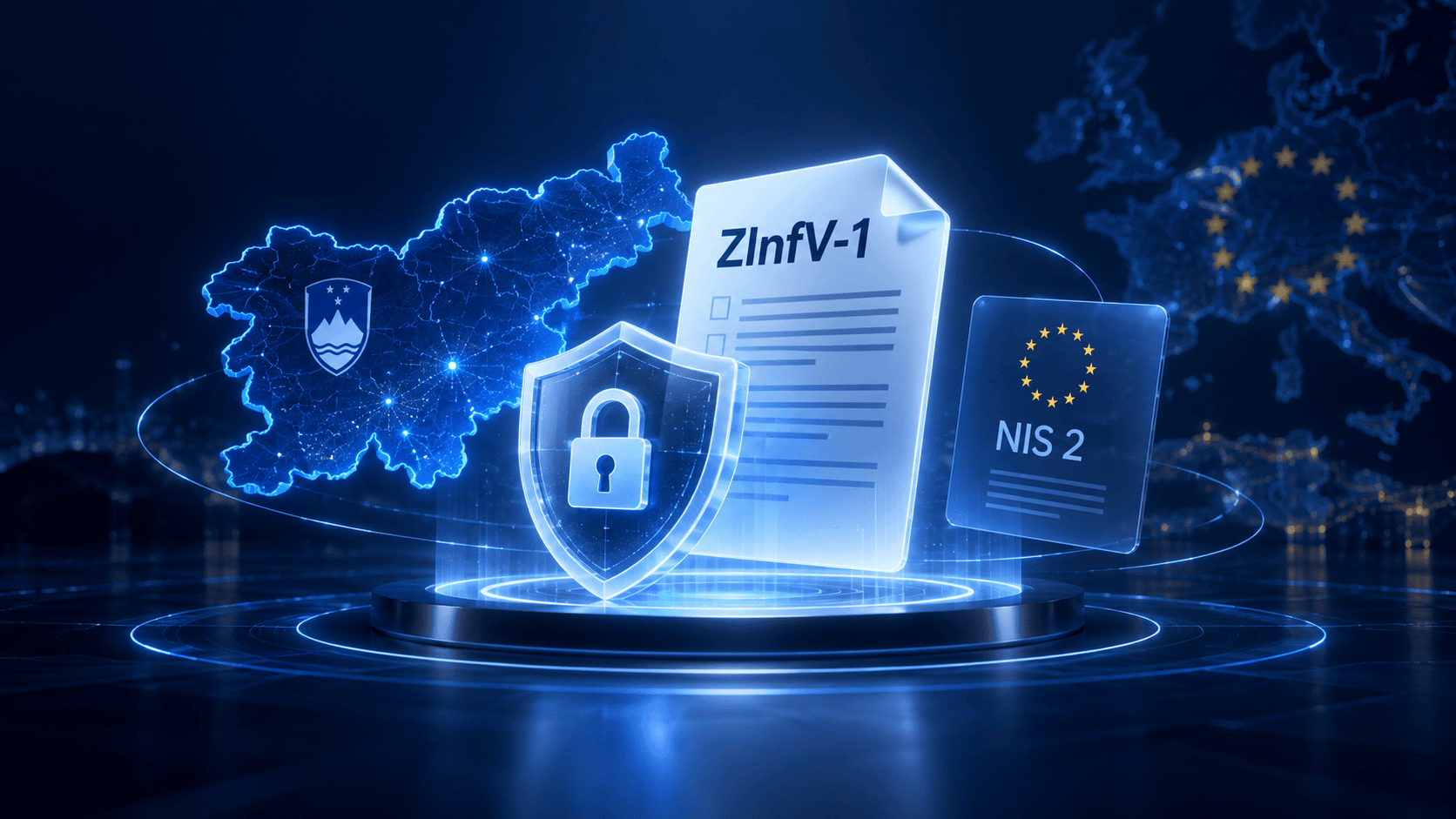
ZInfV-1 je bil objavljen v Uradnem listu RS št. 40/2025 4. junija 2025, velja pa od 19. junija 2025. Z njim je Slovenija v svoj pravni red prenesla Direktivo (EU) 2022/2555 oziroma NIS2.
Kaj je ZInfV-1 in zakaj je pomemben?
ZInfV-1 ureja področje informacijske in kibernetske varnosti ter določa nacionalni sistem informacijske varnosti v Republiki Sloveniji.
Zakon med drugim ureja pristojnosti nacionalnega organa, delovanje skupin CSIRT, ukrepe za obvladovanje tveganj, obveznosti poročanja in nadzor nad izvajanjem zakonskih zahtev. Pristojni nacionalni organ je Urad Vlade Republike Slovenije za informacijsko varnost (URSIV).
ZInfV-1 is a governance requirement, not just a technical one.
Compliance is not limited to the IT department. In practice, it requires clearly defined responsibilities, risk management, documentation, as well as management support and oversight.
Zakon upravljanja informacijske varnosti ne omejuje na tehnične naloge IT-oddelka. Predvsem morajo odgovorne osebe bistvenih in pomembnih subjektov odobriti ukrepe za obvladovanje tveganj ter nadzirati njihovo izvajanje. Poleg tega zakon zahteva podporo vodstva in vključitev informacijske in kibernetske varnosti v letni načrt poslovanja oziroma program dela. Zato skladnost ni omejena na posamezne varnostne tehnologije. ZInfV-1 zahteva tudi dokumentiran sistem upravljanja varovanja informacij in sistem upravljanja neprekinjenega poslovanja, analizo tveganj, popis sredstev, načrte odzivanja na incidente in obnovitve ter tehnične, operativne in organizacijske varnostne ukrepe.
Za večino bistvenih in pomembnih subjektov 62. člen ZInfV-1 določa pomemben prehodni rok. Natančneje, ukrepe iz 21. in 22. člena morajo sprejeti v 18 mesecih od uveljavitve zakona, torej do 19. decembra 2026. Vendar pa je zakon za določene subjekte, ki so bili zavezanci že po prejšnjem ZInfV, ter za določene operaterje po ZEKom-2 določil enoletni rok, ki se je iztekel 19. junija 2026.
Priglašanje incidentov poteka v več fazah. Najprej mora subjekt v primeru pomembnega incidenta brez nepotrebnega odlašanja, najpozneje pa v 24 urah po zaznavi, poslati zgodnje sporočilo. Nato mora najpozneje v 72 urah po zaznavi incidenta poslati priglasitev incidenta. Končno poročilo mora praviloma predložiti najpozneje v enem mesecu po priglasitvi incidenta. Če incident takrat še traja, mora predložiti poročilo o napredku, končno poročilo pa najpozneje en mesec po rešitvi incidenta.
Poleg tega ZInfV-1 določa tudi prekrškovne sankcije. Za določene temeljne kršitve zakon predvideva globe, vezane na letni promet. Natančneje, za bistvene subjekte lahko globe znašajo od 0,5 do 2 % skupnega letnega prometa pravne osebe iz preteklega poslovnega leta. Za pomembne subjekte pa je v primerjavi s tem predviden razpon od 0,3 do 1,4 %. Zakon v 52. in 53. členu določa tudi konkretne denarne meje ter ločene globe za odgovorne osebe.
Praktični pomen ZInfV-1 pa ni omejen zgolj na izogibanje sankcijam. V praksi zahteve po popisu sredstev, jasno določenih odgovornostih, analizi tveganj, neprekinjenem poslovanju, upravljanju dobaviteljev in odzivanju na incidente organizacijam zagotavljajo strukturiran okvir za upravljanje informacijske in kibernetske odpornosti. Podobno tudi URSIV svoja aktualna navodila za zavezance oblikuje na podlagi jasnih odgovornosti, upravljanja tveganj in pravočasnega odzivanja na incidente.
Ali ZInfV-1 velja za vašo organizacijo?
To je praviloma prvo vprašanje, ki bi si ga morala zastaviti organizacija.
Osnovna presoja poteka v več korakih:
Check your activity
First, check whether your organisation performs one of the activities or services listed in Annex 1 or Annex 2 of ZInfV-1. For example, the Act covers energy, transport, healthcare, drinking water and wastewater, digital infrastructure, ICT service management, public administration, postal and courier services, waste management, manufacturing, research, food and chemicals. However, the complete list should be checked directly in the annexes to the Act.
Check your size
Under the general rule, an entity listed in Annex 1 or Annex 2 must have at least 50 employees and, at the same time, annual turnover or an annual balance sheet total of at least EUR 10 million. In other words, the general rule should not be simplified to “50 employees or EUR 10 million in turnover”.
Check the exceptions to the size criterion
However, for certain categories, size is not decisive. These include, for example, certain providers of electronic communications, trust service providers, TLD registries and DNS service providers, critical entities, certain entities of particular importance and certain public administration bodies. Therefore, the Act requires a substantive assessment, not merely a review of employee numbers and revenue.
Determine whether you are an essential or important entity
Next, determine whether your organisation is classified as an essential or important entity. This classification primarily affects the supervisory regime and certain compliance assessment obligations.
Complete self registration
When circumstances arise that make an organisation subject to the Act, the general deadline for self registration is 30 days. In addition, information that changes after registration must generally be updated within ten working days. By contrast, organisations that already met the relevant criteria when the Act entered into force were required to complete their initial self registration by 19 December 2025.
Ključne zahteve ZInfV-1
Odgovornost vodstva in usposabljanje
Za izvajanje ukrepov iz 21. in 22. člena so odgovorni predstojniki subjektov javne uprave in odgovorne osebe pravnih oseb. V okviru te odgovornosti morajo ukrepe odobriti in nadzirati njihovo izvajanje.
Poleg tega se morajo odgovorne osebe najmanj enkrat na štiri leta udeležiti izobraževanja ali usposabljanja s področja obvladovanja tveganj informacijske in kibernetske varnosti. Prav tako morajo zagotavljati redno usposabljanje zaposlenih, medtem ko se morajo skrbniki informacijskih in komunikacijskih sistemov usposabljati vsako leto.
Varnostna dokumentacija
21. člen ZInfV-1 od bistvenih in pomembnih subjektov zahteva vzpostavitev in vzdrževanje dokumentiranega sistema upravljanja varovanja informacij ter sistema upravljanja neprekinjenega poslovanja. Ta sistema morata vključevati najmanj varnostne politike, ažuren popis informacijskih in drugih sredstev, analizo obvladovanja tveganj z opredeljeno metodologijo in sprejemljivo ravnjo tveganja, politiko in načrt neprekinjenega poslovanja z analizo vplivov na poslovanje (BIA), načrt obnovitve delovanja, načrt odzivanja na incidente, načrt varnostnih ukrepov ter postopke za ocenjevanje učinkovitosti teh ukrepov.
Za podporo pri izvajanju zahtev je URSIV objavil vzorčno varnostno dokumentacijo, ki vključuje metodologijo popisa sredstev, analizo tveganj, register tveganj, politiko in načrt neprekinjenega poslovanja, analizo vplivov na poslovanje (BIA), načrt obnovitve delovanja, načrt odzivanja na incidente ter načrt varnostnih ukrepov. Vendar URSIV izrecno poudarja, da te predloge niso univerzalna rešitev. Zato jih je treba prilagoditi infrastrukturi organizacije, njenemu sektorju, obsegu poslovanja, zunanjim ponudnikom storitev in rezultatom analize tveganj.
Tehnični, operativni in organizacijski ukrepi
22. člen ZInfV-1 zahteva izvajanje tehničnih, operativnih in organizacijskih ukrepov, ki temeljijo na pristopu upoštevanja vseh vrst nevarnosti. Zakon zlasti obravnava podporo vodstva, kibernetsko higieno, varnost človeških virov, upravljanje identitet in pravic dostopa, varnostno kopiranje, beleženje dogodkov, kriptografijo, upravljanje komunikacij, varnost dobavne verige, fizično varnost, varen razvoj in vzdrževanje sistemov, upravljanje ranljivosti, zaščito pred zlonamerno programsko opremo, večfaktorsko avtentikacijo ter politike uporabe storitev v oblaku.
Ti ukrepi morajo biti sorazmerni s tveganji. Zato morajo organizacije pri presoji sorazmernosti upoštevati svojo izpostavljenost tveganjem, velikost subjekta, verjetnost nastanka incidentov in njihovo morebitno resnost, vključno z družbenimi in gospodarskimi vplivi. Podobno tudi Izvedbena uredba Komisije (EU) 2024/2690 temelji na načelu sorazmernosti za kategorije ponudnikov digitalnih storitev, za katere se neposredno uporablja.
Dobavna veriga
Varnost dobavne verige je ena od zahtev, ki jih izrecno določa 22. člen ZInfV-1. Zato morajo bistveni in pomembni subjekti opredeliti ustrezne minimalne zahteve glede informacijske in kibernetske varnosti za ključne neposredne dobavitelje oziroma ponudnike storitev. Poleg tega morajo upoštevati njihove specifične ranljivosti in splošno kakovost njihovih praks na področju kibernetske varnosti.
Za podporo temu procesu je URSIV 31. avgusta 2026 objavil posebna priporočila za obvladovanje tveganj v dobavni verigi. Gradiva vključujejo vprašalnik za dobavitelje, orodje za ocenjevanje tveganj, register dobaviteljev in kontrolni seznam pogodbenih določil. Vendar URSIV izrecno poudarja, da gre za praktična podporna orodja in da njihova uporaba sama po sebi še ne dokazuje skladnosti z ZInfV-1.
Dnevniški zapisi
24. člen ZInfV-1 zahteva vzpostavitev postopkov in orodij za spremljanje in beleženje dogodkov v omrežnih in informacijskih sistemih, da je mogoče incidente ali skorajšnje incidente zaznati, analizirati in rekonstruirati. Poleg tega zakon določa minimalne kategorije dnevniških zapisov ter zahteva zagotavljanje njihove pristnosti, celovitosti, razpoložljivosti in zaupnosti. Praviloma je najkrajši rok hrambe šest mesecev. Vendar je lahko potrebno daljše obdobje hrambe, če to izhaja iz analize tveganj.
Priglašanje pomembnih incidentov
Bistveni in pomembni subjekti morajo pristojni skupini CSIRT priglasiti incidente, ki pomembno vplivajo na zagotavljanje njihovih storitev. Natančneje, zakon pomemben incident opredeljuje kot incident, ki je povzročil ali bi lahko povzročil resne motnje v delovanju storitev ali finančno izgubo oziroma bi lahko drugim fizičnim ali pravnim osebam povzročil znatno premoženjsko ali nepremoženjsko škodo.
SI-CERT pojasnjuje, da morajo zavezanci v njegovi pristojnosti zgodnje sporočilo poslati nemudoma oziroma najpozneje v 24 urah. Če takoj po zaznavi še ni jasno, ali incident izpolnjuje merila za obvezno poročanje, SI-CERT zavezancem izrecno svetuje, naj incident vseeno prijavijo.
Pot do skladnosti
A practical approach begins by confirming whether the organisation is subject to the Act and whether it is classified as an essential or important entity. To make this assessment, organisations should consider their actual activities, the annexes to the Act, size data and any specific criteria set out in Articles 6 and 7.
Define responsible persons
Once the organisation’s status is established, the next step is to define responsibilities. Under the Act, responsible persons must approve measures and supervise their implementation. In addition, during self-registration, the organisation must provide details of a contact person for information security and their deputy.
Establish an asset inventory
Next, the organisation should create an inventory of the information and other assets necessary for its operations or provision of services, together with their respective managers. This inventory is a direct requirement of Article 21. Furthermore, it provides one of the foundations for defining the scope of the management system.
Conduct a risk analysis
Based on this information, the organisation should conduct a risk management analysis. In addition, the Act requires the organisation to define its acceptable level of risk and describe the methodology used. For business continuity planning, ZInfV-1 also requires a business impact assessment, or BIA.
Assess existing measures
The organisation should then compare its existing technical, operational and organisational measures against the requirements of the Act. Based on the risks identified, it should determine which improvements are necessary. Furthermore, ZInfV-1 requires measures to be effective, adapted, consistent, proportionate, specific and verifiable.
Connect documentation with implementation
Security documentation must be connected to actual implementation. In this context, URSIV emphasises that inspections consider not only the documentation itself but also whether security measures are actually being implemented. Moreover, URSIV notes that being classified as a regulated entity does not in itself mean that the organisation is compliant.
Prepare incident response and recovery procedures
In addition, the organisation must have procedures in place for incident response and business continuity. Specifically, the Act requires an incident response plan that includes a protocol for notifying the competent CSIRT, as well as a recovery plan for restoring the operation of information systems.
Regularly assess effectiveness
Finally, the organisation must regularly assess the effectiveness of its measures and maintain appropriate evidence. In particular, essential entities must carry out a compliance assessment at least once every two years or following a significant incident. Important entities, on the other hand, must conduct a self-assessment of compliance. In addition, URSIV provides supporting materials and a self-assessment tool for this purpose.
Check additional requirements for digital providers
For certain providers of digital infrastructure and services, Commission Implementing Regulation (EU) 2024/2690 also applies and provides more detailed technical and methodological requirements. To support implementation, ENISA published technical guidance in June 2025, including explanations, examples of evidence and mappings of requirements under the Regulation.
Kako lahko pomaga Blue Octopus?
Although Blue Octopus can support ZInfV-1 management activities, it does not replace legal assessments, CSIRT teams, independent audits or technical security solutions such as MFA, backups, firewalls or event monitoring systems. Instead, it helps organisations structure the management of risks, responsibilities, analyses and documentation, as required under ZInfV-1.
This use is consistent with the logic of ZInfV-1, which requires documented risk analysis, defined responsibilities, planning of measures and verifiable implementation. However, the use of software itself does not constitute evidence that an organisation complies with ZInfV-1.
Frequently asked questions
Short answers to the most common questions about the scope and requirements of ZInfV-1.
No. Although size is an important general criterion, the Act defines several situations in which an entity may be subject to ZInfV-1 regardless of the number of employees or financial thresholds. Therefore, it is necessary to first check the type of activity and the specific categories defined in Article 6.
Yes. This is possible particularly for categories to which the statutory size threshold does not apply, or where an entity is designated under other criteria because of the importance of the service it provides.
Operational responsibilities may be distributed across different functions. However, the Act expressly requires responsible persons to approve risk management measures and supervise their implementation. Information security is therefore also a matter of organisational governance.
No. ISO/IEC 27001 is an international standard that specifies requirements for an information security management system and provides a useful framework for structured risk management. Although ZInfV-1 encourages the use of European and international standards, compliance must still be assessed against the specific statutory requirements.
The general minimum requirement under ZInfV-1 is six months. If the risk analysis identifies a need for a longer retention period, the organisation must adjust the retention period accordingly.
SI-CERT advises organisations to report the incident if they are in doubt. Although this does not change the statutory criteria, reporting reduces the risk of missing the 24-hour deadline while waiting for further information.
Entities subject to ZInfV-1 must manage supply chain risks and define appropriate minimum security requirements for key suppliers or service providers. As a result, ZInfV-1 requirements may also be passed on in practice to companies outside the direct scope of the Act through contracts and procurement procedures.
No. The Act requires the implementation of technical, operational and organisational measures and the assessment of their effectiveness. Although documentation is an important part of the system, it must also reflect actual implementation.
Uradni viri
Naslednji korak
ZInfV-1 zahteva, da organizacija poveže upravljanje tveganj, odgovornosti, dokumentacijo, varnostne ukrepe, odzivanje na incidente in preverjanje učinkovitosti v sistematičen proces. Blue Octopus lahko pomaga pri strukturiranju analiz, tveganj, odgovornosti in povezane dokumentacije na enem mestu.