


A scalable asset management system helps organisations keep structured records as they grow. As companies expand, they introduce new applications, cloud services, business processes and external providers. Managing these resources becomes more challenging when information is scattered across departments or stored in separate spreadsheets. A scalable approach supports clear ownership, consistent asset records and better visibility into important business resources.
Platforms such as Blue Octopus provide configurable information asset management tools that help teams organise resources, assess risks and support business growth.
Scalable Asset Management System for Growing Organisations
Why Business Growth Makes Asset Management More Complex
A small organisation may manage its information assets using a limited number of records. However, expansion often brings new systems, employees and responsibilities. For example, a company may introduce a new customer management platform, open another office or move important services to a cloud provider. Each change can introduce additional dependencies and operational risks.
Without a consistent management approach, different departments may maintain conflicting information. As a result, teams can struggle to identify critical resources and determine who is responsible for them. A structured asset management system provides a clearer foundation for managing these changes.
Features of a Scalable Asset Management System
Scalability involves more than storing a growing number of asset records. A suitable platform should allow organisations to adapt their information structure as business needs evolve. For instance, companies may need to introduce new asset categories, define additional attributes or organise resources across different departments and locations.
Clear ownership is equally important. As teams expand, responsibilities may change and new employees may become accountable for specific systems. Therefore, a scalable approach should support both organisational growth and consistent information management. However, companies should verify technical capacity, performance and integration requirements with the software provider before selecting a platform.
Keeping Asset Ownership Clear as Teams Grow
Growth often involves changes in organisational responsibilities. An application initially managed by one department may later support several business functions. Consequently, it becomes important to document who owns the asset and who maintains its records.
A structured register can connect each information asset with a responsible owner and relevant business information. Teams should also review ownership whenever departments change or systems move between responsible groups. This approach supports accountability and reduces confusion when important decisions arise.
Managing Dependencies Across Expanding Operations
Business systems rarely operate independently. Applications may rely on shared databases, cloud infrastructure and external service providers. As organisations introduce additional services, these relationships can become more complex.
For example, a growing company may use the same authentication service across multiple business applications. If that service becomes unavailable, several departments could experience disruption. Documenting asset dependencies helps teams understand these relationships and identify resources that support essential operations. Furthermore, this information provides useful context for risk assessments, system changes and business continuity planning.
Adapting Risk and Compliance Management to Growth
Organisational expansion can introduce new security risks and compliance responsibilities. New applications, suppliers and business activities may require additional risk assessments or changes to existing controls. A structured management approach helps teams connect these risks with relevant information assets and responsible owners.
In addition, consistent documentation supports internal reviews and compliance preparation. For organisations within its scope, Slovenia’s Information Security Act (ZInfV-1) requires relevant asset inventories and documented risk management arrangements under Article 21.
Similarly, ISO/IEC 27001 provides a framework for managing information security risks as organisational circumstances change. However, asset management software alone does not establish regulatory compliance.
Practical Example: Expanding into a New Business Location
Consider a company opening a second office while introducing several cloud-based applications. Previously, one IT employee maintained information about important systems. After expansion, several departments depend on the same applications and external providers.
The organisation can use a structured asset register to document new information assets, update ownership and record relevant dependencies. Next, it can review the criticality of shared services and assess risks associated with the expanded environment.
As responsibilities evolve, teams can update the records and maintain a consistent overview. This approach helps the company adapt its management processes without rebuilding its information structure for every organisational change.
How Blue Octopus Supports Scalable Asset Management
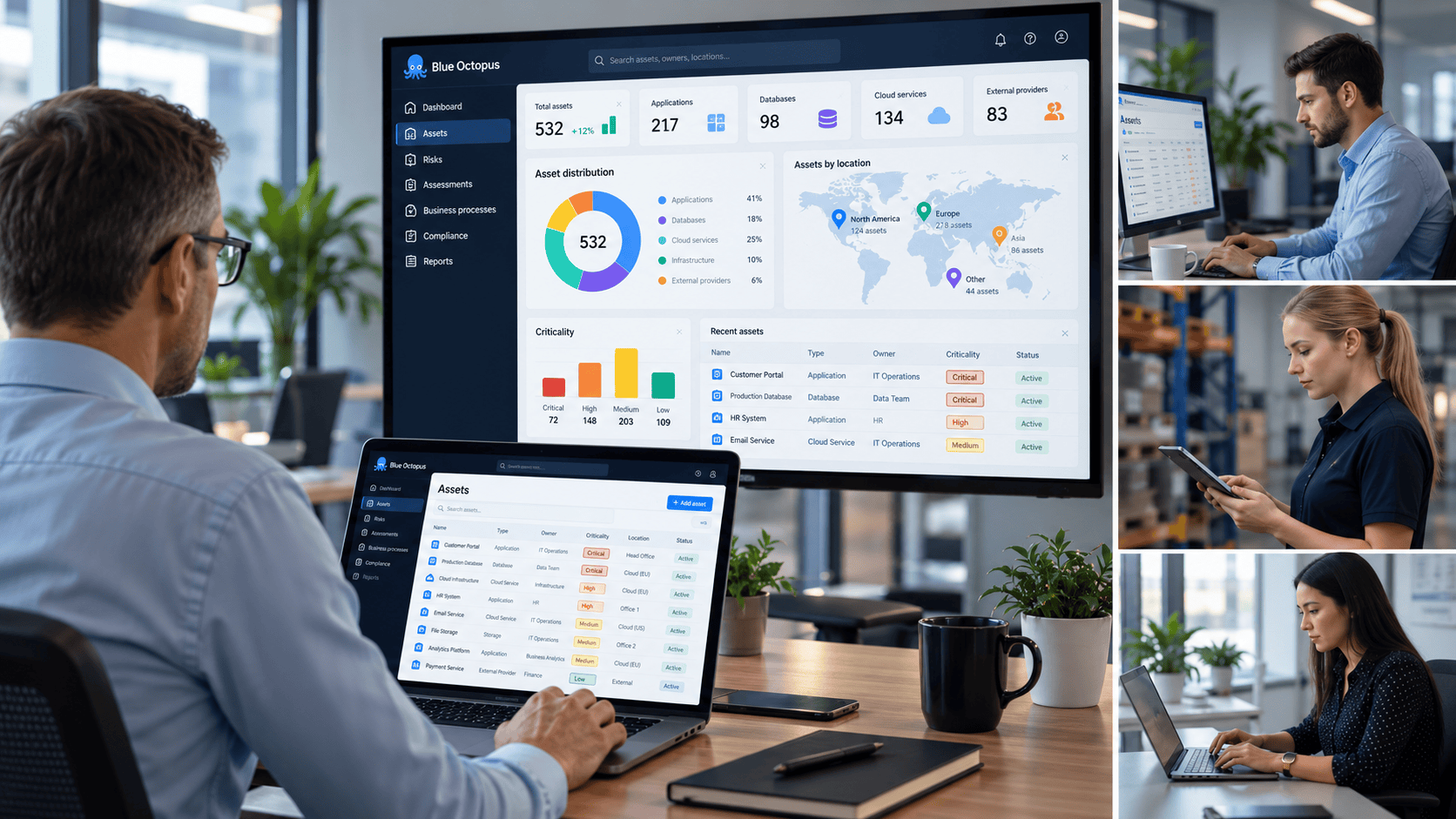
Blue Octopus provides a configurable platform for managing information assets, business risks and related documentation. Organisations can create custom asset types and attributes, define locations, classify asset criticality and assign ownership. The platform also supports asset grouping and visual dependency mapping.
As a result, teams can organise information according to their business structure and adapt relevant records when new resources become available. In addition, Blue Octopus connects information assets with structured risk assessments, business processes and compliance documentation.
These capabilities support consistent management as organisational needs evolve. However, Blue Octopus does not replace automatic device discovery, QR-based equipment tracking, predictive maintenance or financial depreciation systems. Explore the Blue Octopus modules to learn more about its available features.
Frequently Asked Questions
It is a system that can adapt to changing organisational needs, including additional information assets, responsibilities, departments and business processes.
Growth introduces new resources and dependencies. A structured system helps organisations maintain accurate information, clear ownership and consistent risk management practices.
Yes. It can help organise asset records, responsibilities, risk assessments and supporting documentation. However, compliance depends on the organisation’s applicable requirements and implemented controls.
Yes. Blue Octopus supports configurable asset types and attributes, allowing organisations to structure information according to their management needs.
Build an Asset Management Approach That Supports Growth
Business growth changes how organisations manage information assets, responsibilities and operational risks. A scalable asset management system helps teams adapt their records and maintain a clearer overview as new resources and business activities emerge.
By choosing a configurable platform and establishing consistent management processes, companies can support more informed decisions throughout their development. Discover Blue Octopus to explore how flexible information asset management can support your organisation.